PERHATIAN !

Blog dan isi kandungan blog ini hanya untuk layaran, perkongsian, dan bacaan pengunjung-pengunjung blog https://cucutokraja.blogspot.com yang beragama BUDDHA dan BUKAN beragama ISLAM sahaja.

Kandungannya mungkin akan menimbulkan KETIDAKSELESAAN kepada sesetengah golongan. Sila TINGGALKAN laman ini sekiranya anda bukanlah daripada golongan seperti yang dinyatakan di atas.

Keprihatian dan kerjasama anda semua amat saya hargai.

Sekian, terima kasih.

This blog and shared @ posted blogposts are strictly for NON-MUSLIM viewing purposes only. All articles / posts are strictly writer's personal view per se. Writer does not necessarily endorse the views or opinions given by any third party content provider.

TQVM


Wednesday, November 11, 2009

Than Dam's Mai Kru Thep Satra Phraya Ngiu Dam,

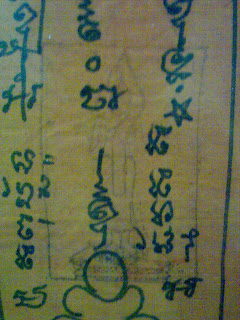
Featuring the great Mai Kru Thep Satra Phraya Ngiu Dam ( Tongkat ). This mai kru was made by Than Dam of Wat Mai Naparam in BE 2538-39. Only 299 pieces of this tongkat was made. Its length is about 8 inches. Made of Ngiu Dam (Penawar Hitam - blackwood), top and end of the tongkat were made of solid brass. The body and both ends have yants khata akhom inscribbed. This phim of mai kru is very rare and hard to obtain now.

This mai kru - meaning an auspicious teacher’s wood / stuff. was concentrated for an auspicious purpose. Than Dam said this mai kru endowed with all sort of protection, blessing and a great purpose of upholding a person’s luck.


This Mai Kru was embedded with a temple code and serial number of temple authenticate. This Mai Kru serial number is 278.


According to Than Dam the auspicious elements inserted into this Mai Kru were;

* Folded Khata Akhom paper with photos of Great Kings of Thailand ( 9 Kings )
* Than Dam Chivon ( robes )
* Sai Sin (holy strings)
* Hair of Than Dam.
* Path Nar Thang
* Takrut Ngern ha (5) Kathas

* Tian Chai Mahamongkun (candle wax blessed in puthaphisek ceremonies.)
* Khao San Dam (Black rice)
* Khao Khun Bart (left over rice in the arm bowl eaten by Than Dam)
* Rang Um Pai Nam (blessings of Maha Ud and Khong Khapan Chatri.)
* Uar-Khorn (unique kind of bull’s horn)
* Chan Rong Trai Din (natural lacquer for Metta Mahalap)
* Kee Pheung Than Dam (for Metta Mahalap and Mahaniyom)
* Din Prong (earth from deep forest)
* Din KooiPu (108 earth from seaside crabs)

* Wanj 108 (108 kind of herbs)
* Wanj Ya (herbs with enhance abilities)
* Wanj Sao Lung
* Wanj Sanaeh Chan Khao
* Wanj Sanaeh Chan Daeng
* Wanj Dok Mai Thong (all these wans are for Metta Maha Sanaeh)
* Wanj Sabut Lert
* Wanj Tao Nang Heng
* Wanj Sampan Teng
* Wanj Phaya Dap Hap
* Wanj Mahalap
* Wanj Puttha Kwak
* Wanj Maha Setthi
* Wanj Setthi Re Nok
* Wanj Setthi Re Nai
* Wanj Chang Prachum Pong
* Wanj Thep Rama Chuan
* Wanj Rama lerk
* Wanj Kratu Jaed(7) Bek
* Wanj Hanuman Nang Taen
* Wanj Praya Raeng Khokam
* Wanj Krung Chak Phra-Indra
* Wanj Nok Koom
* Wanj Nang Koom
* Wanj Kambang
* Wanj Phet Klap
* Wanj Nang Lom
* Wanj Phrai Dam

* Pong Niraksinghae
* Pong Ejijitchae
* Pong Maharaj Kropetch
* Pong Nak Paktalod
* Pong Cindamanee ( for Mahalap and Mahaniyom )
* Pong 9 Chan Pim ( made from 9 full moon )
* Pong Tak Bai Lek Lai
* Pong Tak Bai Raek Khao Thuk
* Pong Phra Reung (in Sukhotai)
* Pong Ngern Yuang (in Trang)
* Pong Tak Poo Sanghawan Non
* Pong Tak Bai Kring Wat Suthat
* Pong Tak Bai Kring Wat Bovorn
* Pong Pattalung
* Pong Patthamang

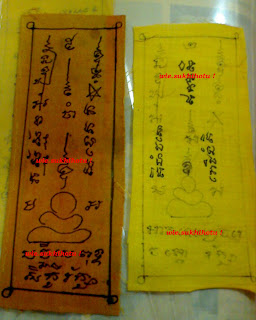
Khata Akom paper with the potraits of 9 Thai Great Kings.

Tuesday, November 10, 2009

Tok Raja - The Real Meaning from the Expert Views !

Below article was extracted from the essay entitled "Jampi Siam Lawan Jampi Melayu". The essay was written by Dr. Muhammed Yusoff Ismail, the expert in Buddhisme.


The main purpose of this posting is none other than to share the idea of the real meaning of "TOK RAJA" phrase as stated in my previous post. Just read and browse thru the extract and get the whole idea on TOK Raja phrase thru the eyes of the expert.


"..............Sebenarnya bidang agama Buddha dan masyarakat minoriti Siam menjadi minat saya semenjak tahun 1977 (MA dan PhD saya masing-masingnya dari Monash University dan Australian National University adalah berkenaan dengan orang Siam di Kelantan dan agama Buddha; tesis kedoktoran saya diasaskan kepada kerja lapangan selama dua tahun tinggal bersama dengan bikkhu Siam di biara di Kelantan).


Saya juga telah menulis beberapa makalah dan sebuah buku berkenaan dengan organisasi sosial agama Buddha di Kelantan, juga tentang ilmu perbomohan Siam dalam konteks penerimaan orang Melayu. Artikel tersebut bertajuk Pengaruh Siam dan Buddha terhadap sistem kepercayaan tradisional orang Melayu Kelantan. (Akademika 49 (Julai) 1996: 23-37).

Dalam semua penulisan yang diterbitkan oleh saya telah menggunakan istilah bikkhu untuk menggantikan `sami’ kerana istilah bikkhu adalah lebih tepat. Dari segi etimologinya istilah tersebut berasal daripada perkataan Pali bhikkhati bermakna `pemberian’ atau `sedekah’ kerana gaya hidup golongan bikkhu ialah menerima `sedekah’ daripada orang awam; tidak berumah tangga annagaram Ñ bahkan mereka tidak boleh berkahwin, kalau berkahwin mesti bercerai dahulu sebelum boleh ditahbiskan menjadi bikkhu. Istilah bikkhu juga digunakan dengan meluas di Indonesia kerana ada penduduk pribumi Indonesia, terutama di bahagian tertentu Pulau Jawa menganut agama Buddha.

Istilah `sami’ yang digunakan oleh DBP sebenarnya kurang tepat. Sami adalah terjemahan daripada istilah Hindu yang bermakna priest (yang boleh berkahwin dan yang mempunyai cara hidup yang jauh berbeza daripada gaya hidup seorang bikkhu). Bikkhu diterjemahkan kepada monk dalam bahasa Inggeris dan ini selari dengan gaya hidup mereka yang celibate iaitu tidak berkahwin dan tinggal dalam kawasan yang berjauhan dengan penduduk awam.

Istilah `kuil’ juga ada sedikit kesilapan dalam penggunaan umumnya, kerana istilah ini lebih merujuk kepada temple, sedangkan tempat tinggal bikkhu dipanggil vihara dalam bahasa Pali. Dalam bahasa Indonesia `biara’ digunakan. Saya menggunakan istilah `biara’ dalam penulisan saya supaya dapat dibezakan daripada `kuil’. Biasanya di kuil tidak ada agamawan yang bermastautin di sana seperti bikkhu yang menetap di biara. Persatuan Buddhis Malaysia juga menggunakan istilah bikkhu dan `biara’ secara meluas.

Istilah tok ca adalah istilah tidak formal yang biasa digunakan oleh orang Melayu untuk merujuk golongan bikkhu. Selain tok ca, istilah `tok raja’ juga digunakan di Kelantan. `Tok raja’ merupakan terjemahan daripada perkataan phra. Istilah phra digunakan dengan meluas oleh orang Siam untuk merujuk kepada bikkhu. Orang Siam sendiri tidak menggunakan istilah tok ca atau `tok raja’ sebagai ganti nama kedua kepada bikkhu. Sebaliknya mereka biasa-nya menggunakan istilah Phor Luang, Than atau Khun kepada bikkhu bergantung kepada kedudukan mereka dalam hierarki Sangha dan kelulusan dari segi tahap pengajian agama (gred Barian, `nak tham’ 1 hingga 3)........".

Dr. Mohammed Yusoff Ismail, pakar penyelidik agama Buddha dari Universiti Kebangsaan Malaysia.


(myis@pkrisc.cc.ukm.my)

Sunday, November 8, 2009

POSTS rePOST !

Sorry for the inconvenient caused ! Many bloggers keep asking me why my recent posts were incomplete and almost all the posts were left with ....???.... Well, as i said before, those blanks were purposely left to the expert to leave his comments on Kelantan's stuff. They commented on me and even scolded me with a swear / harsh words by saying that i'm such a **** and good at bluffing people. Until now none of them drop by and share their thought, experiences and expertise ! So, now we know that...who are the real **** and good at bluffing. Sorry no heart and hard feeling. " Tham Di, Dai Di " Sadhu ! Sadhu ! wie.sukhihotu09 !

Great Kee Pheung

Sharing with the bloggers, especially the Thai Amulets Die Hard the Great Real Kee Pheung from rak Kelantan ( Kelantan state ) by our late Phor Than Kong ( Tok Raja ) of Wat Uttamaram. Again, this kee pheung was inherited from my grandpa. Just safe keep it or just bring in together by putting it inside my sling bag. Dun dare to use it ! Featuring the broken wax casing, very very old wax casing indeed. Such a special view of kee pheung with a piece of khata akhom paper, written khata akhom and folded kradat wau. Kee Pheung closed-up pic. For the first time after a long period of times. ( since 1997 i guess ). The kradat wau was taken out from the wax just for the viewing purposes. Superb ! That's the word that i can say to describe this kee pheung. Featuring the dried and blacken colour of the kee pheung due to the ages. Besides the dried wax, something that will stumble you are the dried betel leaf and chewed betel nuts remaining mixed with the kee pheung. Folded kradat wau with faded khata akhom. No hard feeling ! sadhu ! sadhu ! wie.sukhihotu 09 !

Friday, November 6, 2009

" Phar Yant Khan Barn "

Featuring the "Phar Yant Khan Barn" ( Yant from from the robes to protect the owner's resident / house ). These yants were made by Phor Than Daeng,the late abbot of Wat Phikulthong, Terbak, Tumpat. Kelantan. These yants were made in early 80's. I'm lucky enough to inherited these superb phar yant from my mum, as my beloved mum was quite closed to Phor Than Daeng, my mum said, Than Daeng gave her these phar yant personally.

These yants were a superb tool to be used to protect the owner house / premise. This yant can be hung on the top of the main door and back door frames. According to Phor Than Daeng, For the better result and effect, this yant should be hung at 4 corners / directions of the house. He said, when this phar yant were hung. Its will protect our house from fire and break in. He added that,

"whenever you wanna to move out from your house, the first thing that you have to remove and bring together to your new house is this phar yant "


The faded temple stamp code on each phar yant.


Featuring the "yant khan barn" by late Phor Than Daeng.


Sharing my house's 4 directions "yant khan barn" by Phor Than Daeng. ( permanently hung ! )


Thursday, November 5, 2009

Satd Eow,Thit Ser Morn 02

Featuring another rare stuff from my collection. Satd Eow, Thit Ser Morn ( Waist Takrut ) from Kelantan by late ....???.... This waist takrut were made of 2 big pieces of rolled takrut plates ( 1 copper and 2 black lead plates for each rolled ) Closed-up pic of rolled takrut. A piece of "Tempurung Buta" was used as a stopper at the end of the takrut string.

Satd Eow, Thit Ser Morn 01

Featuring the old Satd Eow, Thit Ser Morn ( Waist Takrut )from rak Kelantan ( state of Kelantan ) by our late Than Kong of Wat Uttamaram. This superb 12 pieces of black leads Satd Eow, Thit Ser Morn were inscribed with differents 12 Khata Akhom for different purposes .

Tuesday, November 3, 2009

Another Rare Hot Stuff from rak Kelantan.

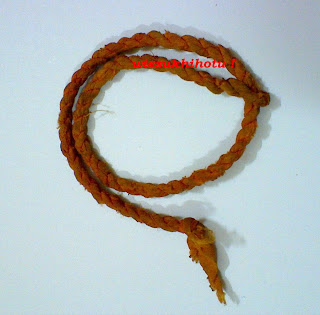
Featuring the old and rare Pha Prachit from rak Kelantan ( Kelantan state ) by our late Phor Than Phut ( Than Kru Phut )of Wat Kampung Balai, Bachok, Kelantan. According to Than Kru Phut this Pha Prachit is to be wore / tied at the right arm. This Pha Prachit was made by our late Than Kru Phut by using his belt, belt used to tighten the robes. This Ph Prachit was made according to the Ayuthaya soldier's secret. During their battlefield, Ayuthaya's soldier wore this Pha Prachit to protect themselves from sharp object and discarding the Khmer / Cambodian black magic.

>

Monday, November 2, 2009

The Great Kee Pheung !

Sharing with the bloggers, especially the Thai Amulets Die Hard the Great Real Kee Pheung from rak Kelantan ( Kelantan state ) by our late ....????..... I hope someone out there could shed the lite about this kee pheung. As for me........ i dun wanna to say and comments anything. ( at least for time being ! ).
 
Hope that SOMEONE who claimed to be an expert in Tok Raja, Than Lek and others great guru monks ( from Kelantan ) histories, stories, amulets and stuffs come out with the story / description about this kee pheung. Now, i'm shutting up my mouth and waiting for the real expert to drop by and share his expertise ! SIFU / GURU / EXPERT out there, drop me a line. Pen down something to be shared. Dun wait for me, because i'm good at lying and making up the stories ! People out there including me, the naive one are waiting for your stories. We know, we can count on you ! Featuring the broken wax casing, very very old wax casing indeed. Such a special view of kee pheung with a piece of khata akhom paper, written khata akhom and folded kradat wau. Kee Pheung closed-up pic. For the first time after a long period of times. ( since 1997 i guess ). The kradat wau was taken out from the wax just for the viewing purposes. Superb ! That's the word that i can say to describe this kee pheung. Featuring the dried and blacken colour of the kee pheung due to the ages. Besides the dried wax, something that will stumble you are the dried betel leaf and chewed betel nuts remaining mixed with the kee pheung.
 
Folded kradat wau with faded khata akhom.
 
No hard feeling !
 
sadhu ! sadhu ! wie.sukhihotu 09 !

Sunday, November 1, 2009

ACHOR Versus AKONG


Do these two words bring any important meaning to you ?
What do you understand with these 2 words ? 


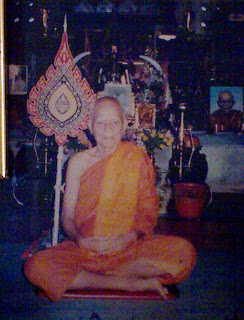
For most Thai Amulets die hard, when these 2 words are uttered, it automatically understood as a specific name given to late Khron Ratchanaren @ Chau Khun Khron @ Tok Raja and late Chau Khun Chan of Wat Uttamaram, Kampung Teresek Repek, Pasir Mas, Kelantan.

There’s no exact and formal documents on the origin of these names, when and who started to use these names. But nowadays, when the word ACHOR is uttered, it automatically reminds us and keep our mind focused on non other than our late Khron Ratchanaren @ Chau Khun Khron @ Tok Raja. Same goes with the word AKONG. AKONG is the name which is referred to late Chau Khun Chan. You can go to any amulet shops, outlets or booths, these 2 words were normal to them and even when you said Chau Khun Khron or Tok Raja, they will automatically counter back and use ACHOR and AKONG.

Before my fingers tip keep on pressing the pads and discuss the matter in depth, let’s me clarify clearly about these 2 names according to Kelantanese ( especially those who were lived in Kampung Teresek , nearby kampung and perhaps those who were born before our independent day ! ).

First and foremost, when you’re in Wat Uttamaram, do approach and talk to the Kampung Teresek old folks, ask them about TOK RAJA and ACHOR, you will see the weird face expression from them and when you say…… Than Chau Khun, they will ask you back, “Which chau khun you are referring to ? “ When you say…… Chau Khun Khron, they will nod their head and start their story about Tok Raja. Pay attention to their diction and choice of words. Most of them will use /say “PHOR THAN KONG” when they’re referring to TOK RAJA. These old folks will use “THAN CHAN” whenever they’re referring to late Chau Khun Chan. You will surprise as neither ACHOR nor AKONG were used by them.

Furthermore, if you are lucky enough to meet Long Chei, Wat Uttamaram former caretaker, do ask him about Tok Raja and his story, and again you will hear the name “PHOR THAN KONG”. You can even ask the janitor or even the cook about PHOR THAN KONG and something that I can promised you is, you will surprise with the answer / feed back given. They will use “PHOR THAN KONG” instead of TOK RAJA or ACHOR whenever they’re referring to Chau Khun Khron !

Do you have any proof to claim or to support your statement ?
From where you get this piece of information ?


My further explanation to support my claims are............

* According to Chinese custom and tradition, the word ACHOR is used when we’re referring to grandfather’s father or in a simple words, great grandfather. While ACHOR CHOR is a phrase that commonly used when we’re referring to our great great grandfather or ancestors.

* The word AKONG is used by Chinese ( mostly Hokkien ) when they’re referring to their father’s father or grandfather.

Why Phor Than Kong ?

PHOR + THAN + KONG = PHOR THAN KONG

PHOR THAN = MONK

KONG = THE OLD, RESPECTED, GREAT and SUPERIOR yet POWERFUL

* PHOR THAN KONG is the name and title given to Tok Raja during his era. PHOR THAN KONG brings the differs connotation to Kelantanese. PHOR THAN KONG is actually name given to Tok Raja because of his superior and owned a superb sacred power ! No one can challenge him and he even gained respect from Malay folks and Bomohs !

* Just like TUAR PEK KONG ( Topekong in Kamus Dewan ), DATUK KONG, KUAN GONG, TU DI GONG, JI GONG. The word KONG or GONG brings the same meaning, connotation and status. All prominent deities names above followed with the word KONG / GONG.

- Topekong ( Kamus Dewan, third edition, page ), Tua Pek Kong ( 大伯公 ) means keramat atau roh yang dipuja oleh orang-orang keturunan Cina. Tua Pek Kong is one of the pantheon of Malaysian Chinese Gods. It was believed the date Tua Pek Kong arrived in Penang was 40 years before Francis Light in 1746.

- Datuk Kong / Gōng (Na Tuk Kong 拿督公 )
The religious belief of the Datuk Keramat worship can be found in Malaysia, Singapore and along the Strait of Malacca. It is a fusion of pre-Islamic spirit belief, Sufi saint worship and Chinese folk religion. According to local Malay legend, all Datuks were once human and were considered the "Forefathers of The Land" and sometimes also known as the "Spirit of The Land" as the locals would call them.

- Guān Gōng / Kong ( 關公 )
Guan Gong was deified as early as the Sui Dynasty and is still being worshipped by Chinese people today, especially in southern China. He is respected as the epitome of loyalty and righteousness.

- Ji Gong / living Buddha ( 济公)
Ji Gong was a monastic in the Linji Chán school. Known for his eccentric behavior and compassionate nature, Ji Gong is deified in the Taoist community often invoked to assist in worldly affairs, while Buddhists invoke Ji Gong in folk stories.

- Tu Di Gong ( 土地公 ) is an indigenous earth god worshiped in in East Asia, whose roots stem from China. A popular deity, he is worshiped by Chinese folk religion worshipers and Taoists. A formal name for Tu Di Gong is Fúdézhèngshén (福德正神), meaning the earth god of wealth and merit.

( adapted & adopted from Kamus Dewan and Wikipedia )

........ so on and so forth. Most of the Chinese deities/ gods names above were followed with the word GONG / KONG. Which means THE OLD, RESPECTED, GREAT and SUPERIOR yet POWERFUL !

Nowadays, most of us assume that the term PHOR THAN KONG brings the same meaning and connotation to AKONG.( 公公 – Grandfather ). Most of us think that, after Tok Raja passed away and Chau Khun Chan was replacing Tok Raja as Wat Uttamaram abbot and awarded with the CHAU KHUN title then. It’s a normal thing to call ACHOR ( 祖先 zǔ xian, great-grandfather ) for those who are older than our AKONG (公公grandfather ). Therefore, the AKONG title was given to Chau Khun Chan and automatically TOK RAJA is our ACHOR ( 祖先great grandfather ). That’s the fact and main reason why the words / names AKONG and ACHOR been used widely when we’re referring to Chau Khun Chan and Chau Khun Khron.

Something that cannot be denied is, when the time goes by, this phrases undergone a transformation processes plus there’s no written evidences about the real name of KHRON RATCHANAREN used during his era ( BE 2468 – 2505, appointed as Wat Uttamaram chief abbot until reached his parinibanna ). Most of us just take these things for granted and assumed that ACHOR and AKONG were the actual and right names to be used when we are referring to Tok Raja and Chau Khun Chan.

SOMETHING TO BE PONDERED............


The word “KONG” means grandfather and “CHOR” means grandfather’s father according to Chinese customs and believes, along with this adaptation, only then the word “Achor” is used when we’re referring to late Khron Ratchanaren and “Akong” is used when we’re referring to late Chau Khun Chan. Athough the adaptation and transformation processes taken place for most of the Thai Amulet die hard nowadays but Long Chei, Wat uttamaram committee or other Kampung Teresek folks are still using / calling Khron Ratchanaren as PHOR THAN KONG instead of PHOR THAN CHOR ! None of them applied this changes. They’re still using PHOR THAN KONG…………..

PHOR THAN KONG this .......
PHOR THAN KONG that .......
PHOR THAN KONG says .......
PHOR THAN KONG uses ......
PHOR THAN KONG’s Phakhawan .......

As I mentioned above, as for us ( Kelantanese ) ACHOR and AKONG are actually names given to Tok Raja and Chau Khun Chan according / following the Chinese custom and tradition. It’s not the real name used by Wat uttamaram committee or Kampung Teresek folks. Therefore, we firmly believed and stick to the “ PHOR THAN KONG”, the real name used by local folks when we’re referring to late Khron Ratchanaren.

As for us, the term KONG ( 公) as in PHOR THAN KONG is not from the ( 公公 – Grandfather ) but the as the KONG ( 公) in deities / gods names which is means THE OLD, RESPECTED, GREAT and SUPERIOR yet POWERFUL ! So Phor Than Kong can be defined as THE OLD, RESPECTED, GREAT and SUPERIOR yet POWERFUL MONK !

What’s wrong with ACHOR and TOK RAJA ?
You such a **** and *** **** !
Are you trying to be smart here ?


That were 2 words and 2 sentences of compliment and token of appreciation that I get from my blog readers. These guys claimed that I’m bluffing and create such the stories just to gain popularity. They even scolded me……….

” hey bro, dun try 2 b smart, if u dunno, just shut the **** off ! “.

When I asked them to come out with the correction and contribute the ideas about Tok Raja to be shared. They said………..

“ What 4 ? Dun trap me la….. u just wanna 2 kena me only ! “
“ Ha ha, I won’t share with u, cos then u’ll claim it urs ideas then ! “

Some even worse……….

“ I don’t know, but I know the information is wrong and misleading, Kelantan Sultan hd honoured the title. I know it from my friend which are also from Kelantan. “

Sorry if my stories, comments, thoughts and discussion hurt someone out side there ! Actually, nothing’s wrong with these 2 names and please take notes that, I’m not trying to be smart either ! ACHOR and TOK RAJA bring the same meaning and connotation to the Thai Amulets die hard. We are still referring to the same KHRON RATCHANAREN of Wat Uttamaram right ? The discussion and the matter were brought out to be discussed here just to share and throw out the view from OUR POINT OF VIEW ( Kelantanese’s view ).

For your information, I’m neither representing any person, individual nor organization. All discussed view and ideas were merely from my personal point of view, as one of the Kelantanese who knows a little about Khron Ratchanaren and try to share this little tiny knowledge with others out there. NEITHER words, phrases, clauses NOR sentences from the discussion were purposely created to insult and annoy anybody.

ACHOR and TOK RAJA are widely used by recent Thai Amulets die hard, collectors and even amulet experts. When these 2 words are uttered, it automatically reminds us on our late Khron Ratchanaren of Wat Uttamaram. As I mentioned in my earlier post ( KHRON RATCHANAREN versus TOK RAJA ), I have discussed in depth about TOK RAJA phrase and its origins from Kelantanese point of view. From the discussion, I have agreed and came to the certain point that TIME CHANGES EVRYTHING, sometimes we need and have to adapt and adopt the changes, otherwise we’ll be left behind. The discussion above were just merely a sharing of thought !

Because as for me, I’m firmly believed that..........

“ They May Not Be Important To One, But May Be So To Another “


Shadu ! Shadu !

Wie.sukhihotu09 !

Tuesday, October 27, 2009

Fenomena Melesapnya "Phra Kreung" !

Kebanyakan penganut agama Buddha secara lumrahnya akan memakai / mengalungkan "Phra Kreung" pada leher dan menyangkut "Phra Kreung" pada poket baju baju masing-masing dengan tujuan untuk melindungi diri dari bahaya mahupun malapetaka !

Kupasan yang ingin dilontarkan di sini ialah berkaitan dengan fenomena pecah rumah dan kecurian yang berleluasa dan bermaharajalela. Pemilik-pemilik "Phra Kreung" di Kelantan semenjak dua menjak ini "sweating from head to toes".....mereka ini terpaksa tidur tanpa dengkuran lagi, terpaksa memeluk erat "Phra Kreung" mereka, ada yang menempah "porch bag" khas untuk diikatkan pada tubuh badan mereka, malah ada yang mengusung beti besi untuk diletakkan di dalam rumah.

"Phra Kreung" yang dianggap keramat dan mempunyai superb super power pun tidak dapat melindungi dirinya sendiri. Terpaksa akur kepada pemecah-pemecah masuk rumah yang semakin bercambah bertanduk ini. "Phra Kreung" dicuri dan dijual kembali kepada "penggila-penggila" Phra Kreung" dengan harga yang berlipatganda.

Mereka yang tangan panjang ini pada kebiasaannya menjadikan rumah kediaman yang menyimpan "barang-barang baik" sebagai sasaran mereka. Pada awalnya mereka akan berpura-pura untuk melihat, belajar, dan berkongsi pengalaman bersama pemilik-pemiliknya. Apabila matahari terbenam dan bulan menonjolkan mukanya maka habislah rumah tuan punya "Phra Kreung" tadi diselongkar. Habis "Phra Kreung" keramat..... antik..... mahal..... disapu !

Antara "Phra Kreung" yang menjadi sasaran pemecah rumah ini adalah seperti; Phra Somdej Wat Rakhang /Bangkhunprom, Luang Phor Thuad Wat Chang Hai, Pitta Phakhawan Luang Phor Khron (Tok Raja), tongkat, takrut Phor Than Lek, Pha Yant Tok Raja dan tidak ketinggalan patung-patung bucha peringatan luang Phor Khron dan Phor Than Na Dham. Menurut sumber pengintipan dan hasil tangkapan yang dibuat oleh daripada pihak polis, "Phra Kreung" yang dikebas ini dijual kembali dengan harga yang berlipat ganda di negeri-negeri Johor, Pulau Pinang, Kuala Lumpur dan Singapura.

Seorang rakan dan juga sahabat dari negeri Cik Siti Wan Kembang ( Kelantan ) memberitahu saya yang Phra Pitta Long Phor Khron dia lepas selepas rumahnya dipecah masuk, siang hari lagi tu ! Pidtanya lepas begitu sahaja setelah dia berkenalan rakan sebusinessnya yang juga merupakan peminat yang minat gila kepada "Phra Kreung" keramat Luang Phor Khron.

Ketua sami Kelantan yang baru, Chau Khun Eak ( Vichanvuthikun ) dari Wat Phikulthong, Kampung Terbak sendiri dikejutkan dengan penggila-gila "Phra Kreung" ini, mereka ini dengan beraninya memecah masuk ruangan sembahyang utama dan mengusung patung bucha antik yang berusia ratusan tahun itu. Mujurlah Saksir Phor Than Na Dham, mengejutkan Chau Khun Eak dan apabila membuka jendela dan menjengah keluar dilihatnya beberapa orang sedang mengusung satu patung Buddha antik ke dalam van mereka. Mujurlah Chau Khun Eak "Dikejutkan".... kalau tidak habislah patung Phor Than Na Dham yang keramat itu. Oleh sebab yang demikian maka, ruangan utama yang meletakkan patung Phor Than Na Dham itu telah di'steel'kan dan dimanggakan dengan ibu kunci yang besar.

Usah mengambil contoh yang jauh....bersebelahan dengan rumah pusaka saya di negeri Cik Siti Wan Kembang ini sebagai contoh. Abang ipar saya dikunjungi seorang salesman yang juga rakannya dari Kuala Lumpur dan meminta untuk masuk dan melihat "altar buchanya", semasa di altar, beliau duduk melutut dan khusyuk bertafakur, maka abang ipar saya membiarkannya buatseketika. Selesai bertafakur rakannya tersebut terus keluar dan meninggalkan ruangan bucha tersebut. Setelah selesai segala urus niaga, maka rakan seperniagaan abang ipar saya yang "alim" itu terus mengangkat punggung dan berlalu pergi ! Sementelahan jugalah dengan "Phra Kreung" kesayangan abang ipar saya yang sekian lama diletakkan di atas bucha altar...maka melayanglah "Phra Sivali Mahthera" dan "Look Om" hasil ciptaan Mendiang Chau Khun Chan itu. Rakan seperniagaan yang "alim kucing" terbabit terus menghilangkan diri sampai sekarang.

Phra kreung yang baik dan keramat tak senang dicari. Pada zaman pascamerdeka ini kita jangan mengharapkan sangat pada Phra Kreung yang baik dan keramat itu menjaga dan menyelamatkan kita. Kita yang harus menjaganya dengan baik ( dunia sudah terbalik ! ).

Wahai pembaca yang budiman......

Banyak sangat persoalan yang sering berlegar-legar di fikiran saya. Adakah saya terlalu menonjolkan diri ? Terlalu menunjuk-nunjuk ? Adakah saya terlalu obsess dengan "Phra Kreung" yang diwariskan kepada saya. Apakah "Phra Kreung" saya selamat, setelah perkongsian tentang didedahkan di ruang siber ini ?

Bertitik tolak daripada kejadian itulah, maka saya terpaksa menarik balik beberapa post yang dahulunya dipaparkan untuk tontonan semua dan mengambil keputusan untuk menolak beberapa permintaan pembaca dan pelayar setia blog saya untuk bersua muka bertentang mata bagi berkongsi serta melihat dengan mata kepala sendiri keunikan "Phra Kreung" yang saya miliki.

Sepuluh jari saya susun, ampun saya mohon ! Jika dikurniakan usia yang lanjut, di lain kesempatan MUNGKIN !

Akhir kata daripada saya.......lindungilah "Phra Kreung" anda sebelum anda dilindungi oleh "Phra Kreung" anda !


wisukhihotu 09 !

Monday, October 26, 2009

Sembang-Sembang Kosong !

Sembang-sembang kosong....tak lain tak bukan hanya sembang-sembang kosong !

Seekor bebiri yang daif memimpin sekumpulan serigala adalah lebih baik daripada sekumpulan serigala berakal panjang yang memimpin seekor bebiri ! Bebiri memimpin tanpa ada rasa prejudis terhadap serigala, namun sebaliknya berlaku pada serigala. Sang serigala berebut-rebut untuk memimpin bebiri dengan nawaitu yang tersasar..... untuk menjadikan bebiri terbabit sebagai lauknya !

Thursday, October 15, 2009

Chau Khun Chan Phayants


Featuring an old phayant of late Chau Khun Chan from Wat Uttamaram, Kampung Teresek, Repek, Pasir Mas, Kelantan. This is a rare stuff instead. This phayant was given to me by my late uncle in 1989. My uncle said, this Chau Khun Chan handwritten yant was personally given to him by late Chau Khun Chan in early 80's. The yant was inscribed onto an old yellow clothes. Same clothes used by late Phor Than Kong ( Tok Raja ) to make his 6-hand Phakhawan Phayant.

I have showed it to my friends but none of them know about this pha phayant, some said it was Tok Raja's handwritten, some said it was Chau Khun Chan's handwritten. May be somebody out there knows something about this phayant and kind hearted to share his knowledge about this phayant.


Featuring the whole views of late Chau Khun Chan's phayant.


Featuring the official temple stamp and code with the name Ratanavongse and the address - Kg Teresek, Repek.


Bottom left is the image of Mae Nang Khuat.


Featuring another old phayant from Wat Uttamaram, Kampung Teresek. This phayant was given to me by my grandpa. My grandpa said, late Chau Khun Chan gave him this phayant. But he doesn't know who and when this phayant was made ? From the old Jivorn ( robe ) uses, handwritten inscribed yants, somebody said it was Tok Raja's phayant. As for me i can't give any comments as i have zero knowledge about this phayant. The thing for sure is.... it was given to my grandpa by late Chau Khun Chan and was given to me in 1997.....merely sharing !